
Four Different Home Irrigation Systems

Sprinkler systems are great, but they’re not the only option to consider when considering how to choose the best irrigation system for your landscape.
To keep your landscape healthy, here are some details about four different home irrigation systems
Drip Irrigation System
Main Benefit: Water is delivered directly to the base of your plants.
Best For: Windy conditions, uneven ground, and landscape designs that include plant groupings and tall grasses rather than a large lawn.
Drip Irrigation keeps your landscape healthy with a series of pipes, tubes, or hoses that route water right to the base of your plants, which prevents water loss from wind or heat evaporation.
A drip irrigation system can be as simple as a weeper, aka a drip soaker hose, which releases water through holes at regular intervals in the hose. You’ll often see the simplest of drip irrigation systems installed at the base of new trees – a simple pipe that helps water reach the tree roots when the area is watered by a hose, rain, or a sprinkler irrigation system.
Hand Watering or Surface Irrigation System
Main Benefit: Water amounts can be adjusted to meet the specific needs of each plant.
Best For: A mixed landscape with new and mature plants and people who love gardening (and have the time to water their landscape on a routine basis). You might be surprised to learn that even though I am the owner of Lotus Landscaping and Tree Services, surface irrigation is the system I usually use at home – a hose with a good spray attachment, an old-fashioned Sprinkler that my kids can run through, and a watering can. I know that surface irrigation is not the most effective time saver, but I like slowing down and watering everything early in the morning. By watering each plant myself, I can adjust the amount of water just right – with practice, you’ll be a pro at this, too.
One way to measure the level of watering is the finger test: first water near the roots, never at the top of plant. After watering, wait a few minutes to allow the water to soak into the soil and then stick your finger in the soil to check that the first few inches of soil are soaked through. I often water several plants, then go back and test the soil one by one.
To be honest, the main reason I like to use surface irrigation or hand watering is that as a single dad of four kids and the owner of a landscaping company, this is sometimes the only chance I get to slow down all day. The simple habit of hand watering is hypnotic in a way – I often pray and meditate while I water my plants, which is very important to my life as a faithful man.
Sprinkler Irrigation System
Main Benefit: Water is delivered evenly to large areas of lawn in a short time.
Best for: large lawns and borders filled with ground hugging plants and/or flowers.
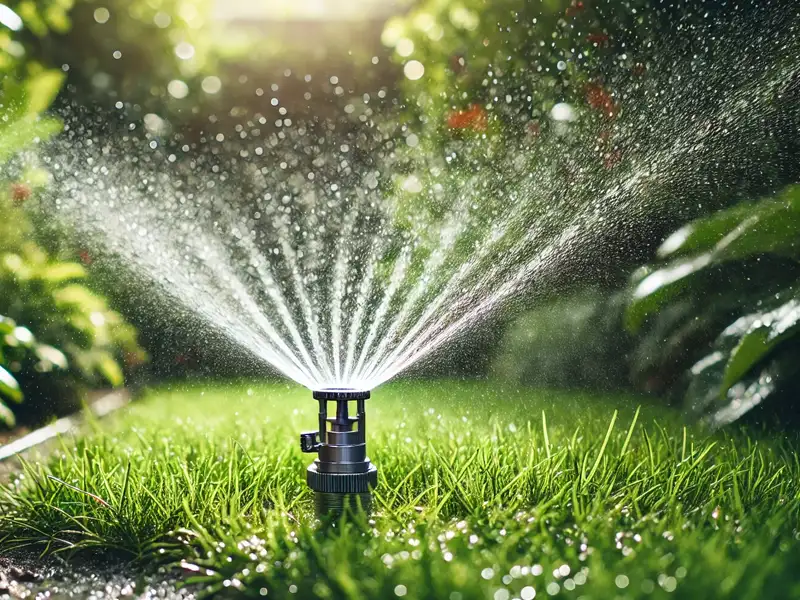
How It Works: For your lawn and ground covering, it’s usually best to stick with sprinkler irrigation. Like drip irrigation, sprinkler irrigation utilizes pipes and tubing under the ground to deliver water. Unlike drip irrigation, the water is routed to sprinkler heads placed strategically throughout the landscape. One big advantage of sprinkler irrigation systems is that the sprinkler heads retract in between waterings, leaving your landscape pristine.
Combined Irrigation System
Main Benefit: Different irrigation systems combine to meet the needs of your entire landscape.
Best For: Most landscape designs and lawns with different landscape features including trees and gardens of flowers, plants, and/or vegetables.
For individual plants like tomatoes or peonies, a drip irrigation is probably best, but for rows or groups of plants and lawns, choose surface or sprinkler irrigation.
Quick Tips From Lou:
1.) Every now and then, be sure to water by hand – surface irrigation is a great way to notice the little things that might need your attention and a fantastic break from the hustle and bustle of this wild world!
2.) Remember to take weather into account when programming or turning on your sprinkler irrigation system. You can also invest in a smart irrigation controller, which automatically factors weather conditions into irrigation schedules.
Browse Our Other Articles
A Lost Dog and A Landscaper –Small Mistake, Big Lesson
A small mistake involving an open gate and a lost dog taught me invaluable lessons about accountability, trust, and t...
Four Hot Tips For Summer Landscaping In The Midwest
Here’s four simple ways to help your landscape thrive even during a Midwest Summer
...How To Choose The Best Irrigation System for Your Landscape
To keep your landscape healthy, here are some details about four different home irrigation systems
...
Launching Our New Landscaping Website
Launching a new website teaches a landscaper about patience, faith, and gratitude. Beauty is born in unlikely places,...